Tub-to-Shower Conversion: Cost, Timeline & What to Expect
Tub-to-shower conversions are one of the most popular bathroom upgrades among Concord homeowners — especially in secondary bathrooms that rarely see a bathtub used, or primary bathrooms where a spacious walk-in shower is a higher priority than a soaking tub.
If you’re considering the switch, here’s what actually goes into the project, what it costs, and how long it takes from start to finish.
Why Homeowners Convert a Tub to a Shower
- The tub is rarely or never used
- A walk-in shower is easier and safer to access, especially for aging in place
- It modernizes the look of an outdated bathroom
- It can make a small bathroom feel more open
That said, if you only have one bathtub in the house, it’s worth thinking about resale — some buyers, especially families, prefer at least one tub in the home. Many homeowners solve this by converting a secondary or guest bathroom’s tub while keeping a tub in the primary bathroom.
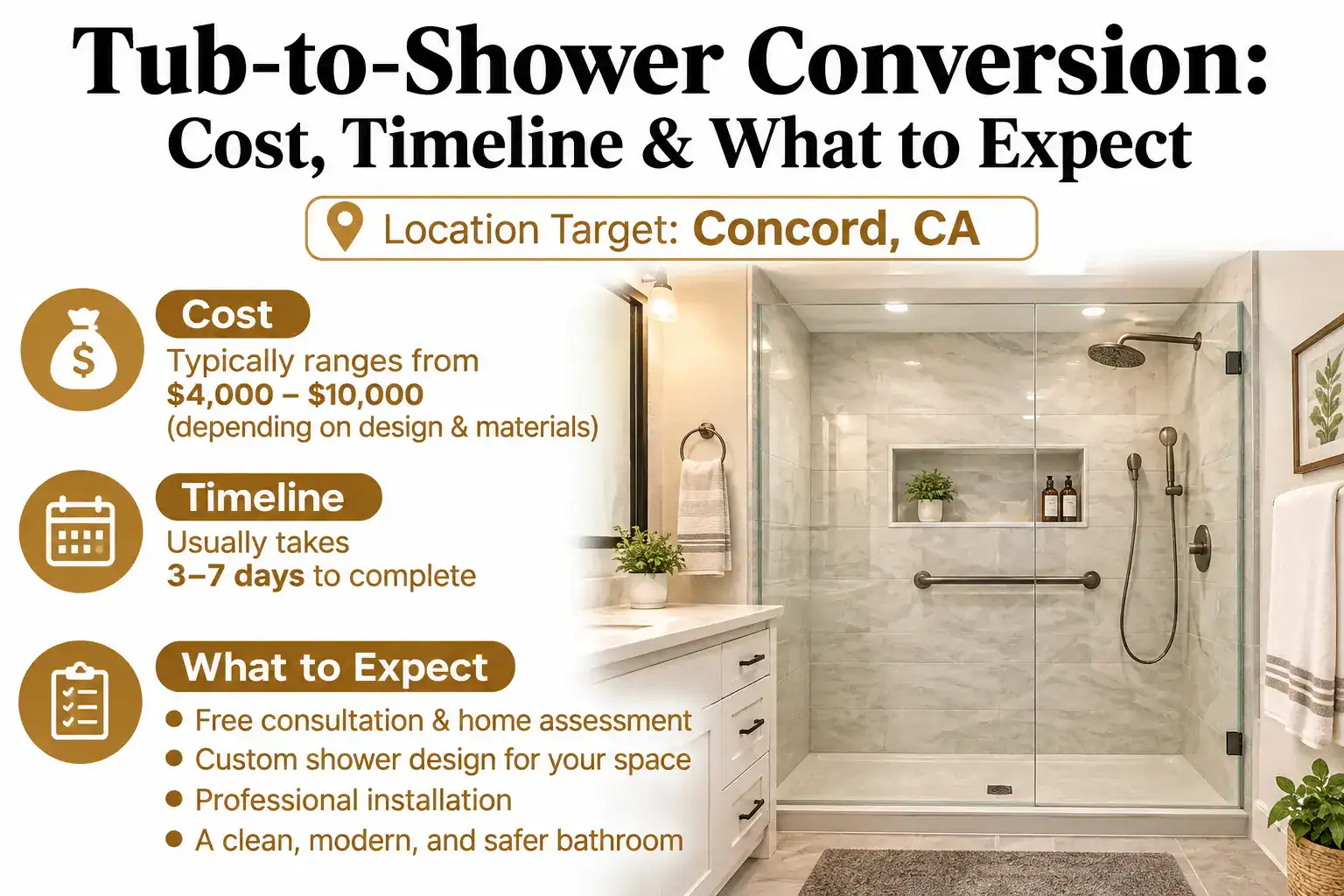
Tub-to-Shower Conversion Cost in Concord
| Conversion Type | Estimated Cost |
|---|---|
| Basic conversion (prefab shower kit, same footprint) | $5,000 – $8,000 |
| Standard conversion (tiled walls, framed glass) | $8,000 – $14,000 |
| Custom conversion (tile shower pan, frameless glass, niche/bench) | $14,000 – $22,000+ |
Conversions typically cost more than a simple shower-to-shower remodel because they involve extra demolition, plumbing rework, and sometimes wall or flooring repair once the tub is removed.
What's Involved in the Process
1. Demolition
The existing tub, surround, and sometimes surrounding tile or drywall are removed. This step can reveal hidden issues — water damage, outdated plumbing, or subfloor problems — which is common in older Concord homes.
2. Plumbing Adjustments
The drain location often needs to shift slightly to accommodate a shower pan, and the shower valve may need to be repositioned or upgraded. This is typically handled by a licensed plumber as part of the project.
3. Waterproofing
Proper waterproofing (membrane or backer board behind tile) is critical for a shower — it’s one of the most important steps for preventing leaks and mold down the line, and not a place to cut corners.
4. Shower Base Installation
Either a prefabricated base or a custom tiled shower pan, depending on your budget and design preference.
5. Wall Finish & Glass Enclosure
Tile, acrylic panels, or a solid surround, followed by the glass enclosure (framed, semi-frameless, or frameless).
6. Final Details
Grab bars, niches, benches, shower heads, and fixtures are installed, followed by a final walkthrough.
Timeline: How Long Does It Take?
| Stage | Typical Duration |
|---|---|
| Demolition | 1 day |
| Plumbing rework | 1–2 days |
| Waterproofing & base install | 1–2 days |
| Tile/wall finish | 2–5 days |
| Glass enclosure & finishing | 1–2 days |
| Total project time | 1–2 weeks |
If permits are required for the plumbing work — which is common for conversions in Concord — factor in additional time for permit approval before construction begins.
Common Issues That Can Affect Cost
- Water damage behind the old tub — if the demolition reveals rotted subfloor or drywall, repairs add to both cost and timeline.
- Outdated plumbing — older homes may need supply line or drain upgrades to meet current code.
- Structural changes — widening the space or moving a wall goes beyond a standard conversion and moves into full remodel territory.
Budgeting an extra 10–15% contingency is a good rule of thumb for any conversion in an older home.
Tips for a Smooth Conversion
- Get a licensed contractor to inspect the space before quoting — a lot of the cost variables (plumbing condition, subfloor) aren’t visible until the tub comes out.
- Decide on glass style early — framed vs. frameless changes both the cost and the timeline for ordering.
- Ask whether your existing drain size works for a shower pan — this affects whether plumbing needs to be modified.
- If resale is a concern, consider keeping a tub in at least one bathroom in the home.
Is a Tub-to-Shower Conversion Worth It?
For most homeowners, yes — especially in bathrooms where the tub isn’t being used. It’s a relatively contained project compared to a full remodel, delivers a noticeably more modern space, and improves everyday accessibility and safety.
Ready to Convert Your Tub to a Shower?
For most homeowners, yes — especially in bathroo
The best way to get an accurate quote is a walkthrough with a licensed local contractor who can check your plumbing and layout in person.
Contact us today for a free, no-obligation quote on your tub-to-shower conversion in Concord, CA.
ms where the tub isn’t being used. It’s a relatively contained project compared to a full remodel, delivers a noticeably more modern space, and improves everyday accessibility and safety.
Frequently Asked Questions
Do I need a permit for a tub-to-shower conversion in Concord, CA?
In most cases, yes. Since the drain and shower valve typically need to be adjusted, the project usually falls under plumbing work that requires a permit from the City of Concord Building Division. A licensed contractor can confirm what applies to your specific project and pull the permit on your behalf.
Can I convert a tub to a shower myself?
It’s not recommended. Proper waterproofing and plumbing work are critical to preventing leaks and mold behind the walls — mistakes here often aren’t visible until months later, when the damage is more expensive to fix than the original project would have cost.
How long does a tub-to-shower conversion take?
Most conversions take 1–2 weeks from demolition to final walkthrough, not counting permit approval time.
Will removing my only bathtub hurt my home's resale value?
It can, if it’s the only tub in the house — some buyers, especially families with young children, prefer at least one bathtub. If resale is a concern, consider converting a secondary bathroom’s tub while keeping one in the primary or another bathroom.
What's usually the biggest unexpected cost in a conversion?
Water damage or rot discovered behind the tub once it’s removed. This is more common in older homes and is why a 10–15% contingency budget is recommended for any conversion project.
Can I keep my existing tile or wall surround and just replace the tub?
Sometimes, but it’s uncommon — removing a tub usually disturbs the surrounding tile and waterproofing, so most conversions involve replacing the wall finish as well. A contractor can assess this during an in-person walkthrough.